Air Conditioning Installation in Bristol
Bristol’s summers have changed. Top-floor flats, attic bedrooms and offices with big south-facing windows now spend weeks each year uncomfortably warm, and city-centre streets hold on to heat well into the evening. Fans just move warm air around; portable coolers are noisy and leak heat back through the window hose.
We install fixed split air conditioning for homes and businesses across Bristol. Nearly all of them run both ways. Strictly they’re air-to-air heat pumps, meaning the unit that chills a bedroom in a heatwave becomes its cheapest heater from October onwards.
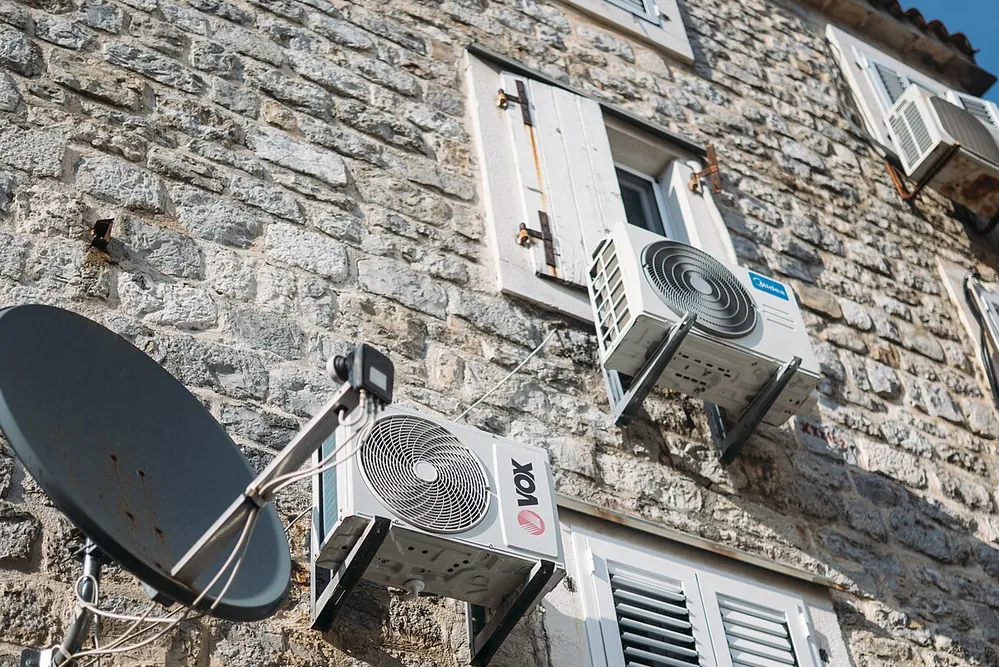
Split Systems vs Portable Units
- Real cooling power: sealed pipework carries heat outside, rather than a hose that lets warm air back in around the window.
- Quiet: the compressor lives outdoors, so the indoor unit is quiet enough for bedrooms.
- Efficient: inverter compressors throttle up and down, so far fewer kilowatt-hours go into the same comfort.
- Heating included: run it the other way in winter at a fraction of the cost of an electric heater.
- No clutter: nothing on the floor, nothing to store over winter, nothing hanging out of a window.
Rooms We’re Asked to Cool
Attic and dormer bedrooms
Slate roofs soak up sunshine all afternoon and release it into the room just as you go to bed. A small high-wall unit or a floor console under a dormer window makes the room usable again.
Glass-fronted apartments
Many newer flats around the Harbourside, Finzels Reach and Temple Quarter have large windows and limited opening, making them prone to overheating. Balcony-mounted outdoor units often work well, subject to the building’s rules.
Home offices and garden rooms
Screens and equipment add heat to small rooms. A compact unit keeps a garden office comfortable all year without a separate heater.
Nurseries and bedrooms for poor sleepers
Steady, quiet temperature control with a night mode helps when the house simply won’t cool down after a hot day.
For Businesses
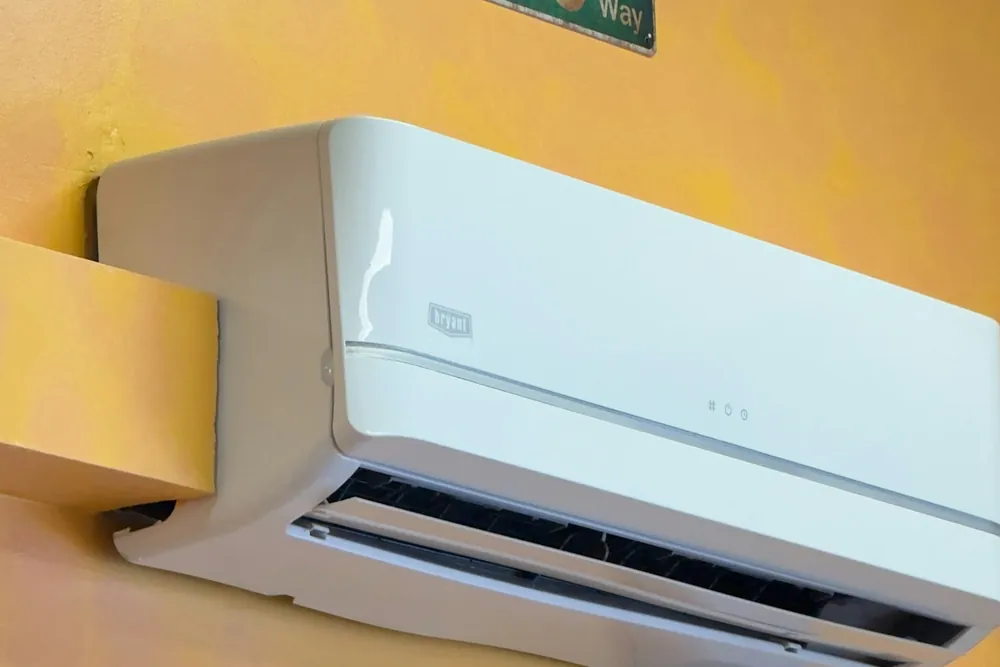
We fit air conditioning for offices, shops, salons, clinics, studios and small server rooms across Bristol, from Stokes Croft and Gloucester Road to business parks in Aztec West and Avonmouth. Commercial systems are sized for occupancy, equipment and glazing, and can be installed early mornings or weekends to avoid disrupting trade. Larger systems may fall under F-gas leak-check and record-keeping rules; we’ll explain what applies and can include it in a maintenance plan.
How We Plan It
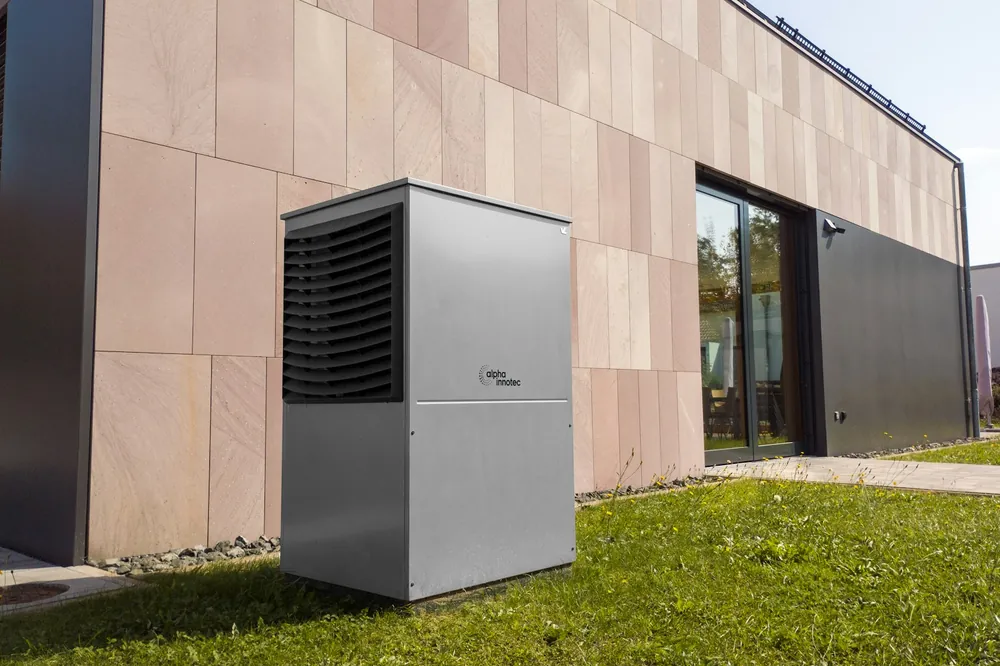
The survey looks at room size, orientation, window area, insulation, the number of people and the equipment in the room. From that we work out both the cooling and heating loads and choose a unit that handles hot afternoons without being oversized. Then we settle where the head goes inside, pick a quiet outdoor position away from sleeping areas, and map out pipework and drainage.
Before switch-on, each system is nitrogen-tested and vacuumed, and the refrigerant is handled exclusively by legally qualified F-gas engineers.
Beat the Heatwave Queue
When the first heatwave arrives, demand spikes and lead times stretch. Get in early: a spring booking, or an autumn install that heats you through the winter, puts you ahead of the rush.
Sizing for Bristol Summers
Cooling capacity is quoted in kilowatts. A small bedroom might need around 2kW, a typical living room 2.5–3.5kW and an open-plan kitchen-diner or glazed extension considerably more. Those are rough starting points only. An attic room in Totterdown facing the evening sun picks up vastly more heat than a shaded ground-floor room of equal size in Fishponds, so every room gets its own sum — checked against what it needs in winter, too.
Noise and Neighbours
Indoors, quiet or night modes keep fan noise very low. Outdoors, position matters most: we avoid tight corners that echo, keep units back from boundaries where possible and fit anti-vibration mounts as standard. On closely packed Bristol terraces with shared back walls and small yards, we’ll talk through the options with you so the result works for the people next door too.
Cleaner, Drier Air
Every indoor unit filters the air passing through it, and many models add finer filtration for pollen and dust. In cooling mode the coil also condenses moisture out of the air and drains it away, which makes humid spells much more bearable. Clean filters matter more than anything else you can do yourself.
Planning Points
Permitted development rules for heat pumps cover units used for heating. A unit used only for cooling may need closer checking, and conservation areas, listed buildings and blocks of flats carry their own rules. Because the systems we install are reversible and used for heating, they usually fall under the heat pump rules, but we check every case.
Controls and Running Costs
Most systems we fit include a handheld remote and a phone app, so you can cool a bedroom before bedtime or switch the system off from work. For lower running costs, set cooling to a comfortable 24–26°C rather than as cold as possible, keep windows closed while it runs and draw blinds on sunny elevations during the afternoon.
Grant Eligibility
A cooling-only installation doesn’t qualify for a grant. A reversible system installed as the heating for the property, replacing fossil-fuel or direct electric heating, may qualify for £2,500 through the Boiler Upgrade Scheme. More on the grant page.
Care and Maintenance
Wash filters regularly in busy months, don’t let leaves or furniture crowd the outdoor unit, and have it serviced annually. See maintenance.
What Bristol customers typically pay
Cooling-led installs use identical hardware to air-to-air heating, so the prices match. A single bedroom is the most common starting point.
- One room, air-to-air£1,500 – £3,500
- Two rooms on one outdoor unit£3,000 – £6,000
- Four or more rooms£5,000 – £12,000+
- Air-to-water heat pump (boiler swap)£8,000 – £14,000
Ranges reflect typical Bristol installs in 2026. We confirm an exact figure in writing after visiting the property. How we price a job.